THE HEALING FREQUENCY
Five Tones vs. Sound Bath
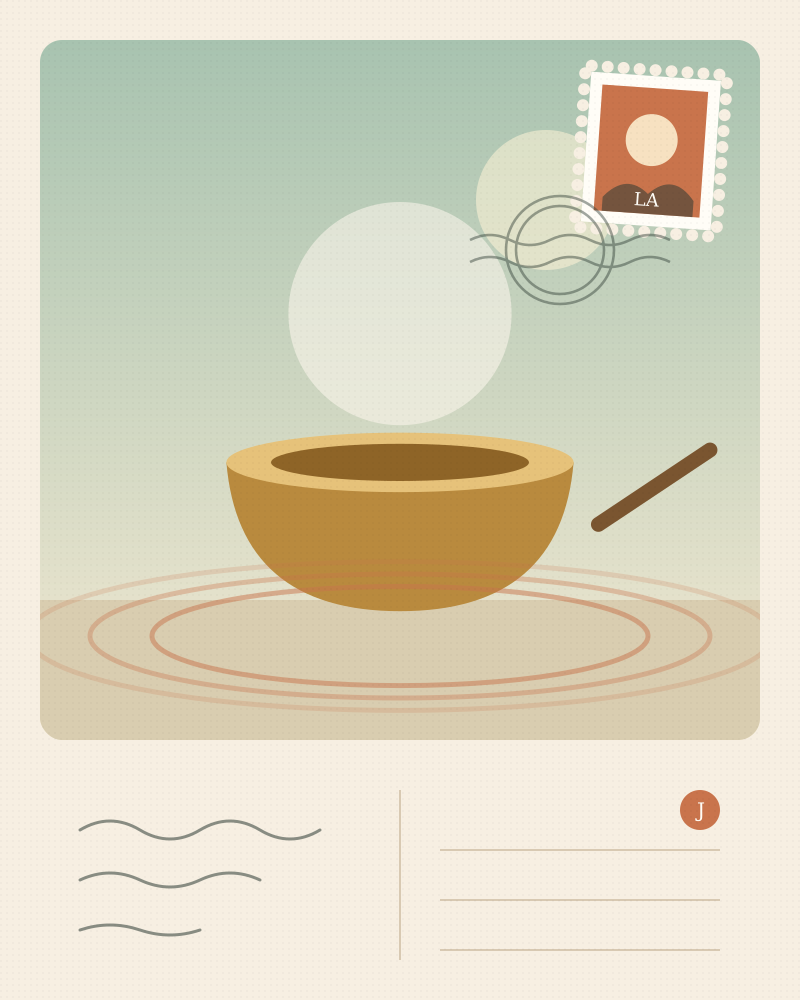
Chinese medicine's five-tone therapy vs. the LA sound bath, side by side.
Translated from Jasmine’s original Chinese. The illustrated slides are on the interactive reader.
Key points
- The five tones (gong, shang, jue, zhi, yu) map to the spleen, lungs, liver, heart and kidneys
- Five tones are targeted; a sound bath is about letting go
- Both are relaxation and self-care, not treatment
Full text
Side by side
Chinese medicine has five-tone therapy; LA has the sound bath. One is in the Huangdi Neijing, the other is on a hotel rooftop, and both use sound to take care of the body.
What the five tones are
Gong, shang, jue, zhi, yu: five notes. The Huangdi Neijing links them to the five organs: gong to the spleen, shang to the lungs, jue to the liver, zhi to the heart, yu to the kidneys.
The tones connect to emotions too
Overthinking strains the spleen, grief the lungs, anger the liver, overexcitement the heart, fear the kidneys. The idea of five-tone therapy is to use the right sound to bring an overloaded emotion back into balance.
What a sound bath is
It's not a bath; you're surrounded by sound. Lie down, close your eyes, listen. Crystal bowls, singing bowls, gongs, ocean drums, about an hour.
The biggest difference
Five tones are targeted: figure out your constitution and your mood first, then choose the tone. A sound bath is about letting go: no choosing, you lie there and let the sound carry you.
What they share
Both believe the body listens. Slower breathing and softer shoulders are the first things sound changes.
Honest reminder
Both are relaxation and self-care, not treatment. Most of the research is still very early; if you have a health condition, ask your doctor first.
Two-city mirror
In Taipei, the five tones live in Chinese medicine books; in LA, the sound bath lives on rooftops and in the desert. The same act of listening, one in an old book, one right now.
An original JSLALALAND field guide by Jasmine Chang (@jslalaland).